Workplace Fire Extinguisher Requirements Australia (WHS Guide)
If you run a business in Australia, you have a legal duty to provide and maintain fire extinguishers in your workplace. But how many do you need? What type? And how often do they need to be serviced?
This guide covers the key requirements under the Work Health and Safety (WHS) Act 2011, the WHS Regulations 2017, and the two Australian Standards that govern extinguisher selection and maintenance — AS 2444 and AS 1851.
The Legal Framework
Fire extinguisher requirements in Australian workplaces sit across three layers:
| Layer | Document | What it covers |
|---|---|---|
| Primary duty of care | Work Health and Safety Act 2011 (Commonwealth model, adopted by most states/territories) | PCBU must ensure, so far as reasonably practicable, the workplace does not put workers or others at risk |
| Emergency planning | WHS Regulations 2017, Part 3.1 (Emergency plans) | PCBU must prepare, maintain and implement an emergency plan — includes procedures for fire, evacuation, and communicating with emergency services |
| Selection & placement | AS 2444-2001: Portable fire extinguishers and fire blankets — selection and location | Which type of extinguisher is required, how many, where they must be placed, mounting height and signage |
| Product compliance | AS/NZS 1841: Portable fire extinguishers | Extinguishers must meet this product standard to be legally compliant for use in workplaces |
| Maintenance | AS 1851-2012: Maintenance of fire protection systems and equipment | How often extinguishers must be inspected, tested and serviced — and by whom |
What Is a Prescribed Fire Safety Installation (PSI)?
Under Australian state fire safety legislation, a Prescribed Fire Safety Installation (PSI) — sometimes called an Essential Safety Measure (VIC) or Essential Fire Safety Measure (NSW) — is any fire safety system that is legally required to be installed and maintained in a building. The terminology varies by state but the principle is the same nationally.
Fire extinguishers become a PSI when they are required by your state’s fire safety regulation for that building’s occupancy class under the National Construction Code. In Queensland, this is governed by the Building Fire Safety Regulation 2008. The building’s Certificate of Classification records which PSIs are present — but the legal obligation comes from the regulation itself, not the certificate. This has three important legal consequences:
- You cannot remove it. Once prescribed, the installation is a permanent legal requirement of that building — not optional equipment you can choose to discontinue.
- You must maintain it. The relevant state legislation requires PSIs to be maintained to the applicable Australian Standard (AS 1851) at all times. A poorly maintained PSI is a compliance breach even if the extinguisher is still present.
- You must keep records. Maintenance records for PSIs must be kept and produced on request from an authorised officer. A service tag on the extinguisher is not a sufficient record — a full written record of maintenance is required.
Common PSIs in Australian workplaces
- Portable fire extinguishers
- Fire hose reels
- Fire detection and alarm systems
- Emergency and exit lighting
- Sprinkler systems
- Fire doors and smoke doors
- On-site hydrant systems
- Evacuation warning systems
Which PSIs are required in your specific building is determined by the building class under the National Construction Code and the conditions of the building’s approval. Your building’s Certificate of Classification/Occupancy and the list of fire safety installations attached to it are the authoritative references.
Fire Classes — Which Extinguisher Does Your Workplace Need?
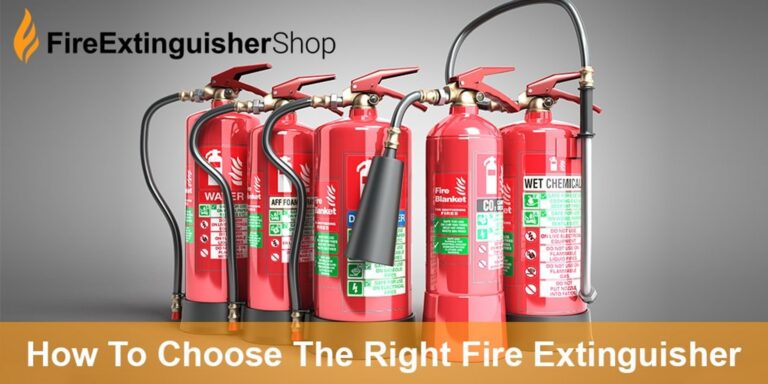
The type of fire extinguisher required depends on the fire risks present in your workplace. Australian Standard AS 2444 uses six fire classes:
| Fire class | What it covers | Correct extinguisher type | Common workplaces |
|---|---|---|---|
| Class A | Ordinary combustibles — wood, paper, cardboard, fabric, most plastics | Water, foam, ABE powder, wet chemical | Offices, retail, warehouses, schools |
| Class B | Flammable and combustible liquids — petrol, diesel, oils, paints, solvents | Foam, ABE powder, CO2 | Workshops, service stations, manufacturing, car parks |
| Class C | Flammable gases — LPG, natural gas, acetylene | ABE dry powder | Gas fitting, welding, food processing, hospitality |
| Class E | Electrically energised equipment | CO2, ABE powder | Server rooms, electrical switchrooms, offices with electrical hazards |
| Class F | Cooking oils and fats | Wet chemical only | Commercial kitchens, cafes, restaurants, food manufacturing |
| Class D | Combustible metals — magnesium, aluminium, sodium | Specialist dry powder (specialist only) | Metal machining, specialist manufacturing — rare in general workplaces |
AS 2444 Placement Requirements
AS 2444-2001 sets the rules for where extinguishers must be placed and how they must be mounted. These apply to all workplaces.
Mounting Height
- Top of extinguisher handle: maximum 1200mm above floor level
- Bottom of extinguisher: minimum 100mm above floor level
- Clearance zone: minimum 1000mm must be maintained in front of and around each extinguisher — nothing stored or parked in that space
Signage
- At least one sign must be positioned directly above or adjacent to each extinguisher
- Sign height: minimum 2000mm above floor level
- Signs must be visible from up to 20 metres on approach
- Sign design: white symbols on a red field, per AS 2700
Travel Distance and Coverage
- The maximum travel distance from any point in the workplace to the nearest appropriate extinguisher is typically 15 metres — though AS 2444 requires a risk-based assessment for each premises rather than applying a single fixed rule
- Coverage is determined by the hazard present in each area, not purely by floor area — a high-hazard area (workshop, chemical storage) requires more extinguishers than a low-hazard area of the same size
- A single higher-rated extinguisher must be used where the standard requires it — you cannot substitute multiple lower-rated units
- Extinguishers must not exceed 23kg gross mass
Temperature Range
- Extinguishers must be stored within a temperature range of 5°C to 50°C
- Where temperatures fall outside this range (e.g. cold rooms, outdoor exposure), thermal protection measures are required
Requirements by Workplace Type
The table below gives a practical starting point for common Australian workplaces. A licensed fire protection technician must assess your specific premises and confirm the requirements for your building class and hazard level.
| Workplace type | Primary fire risk | Extinguisher type(s) | Notes |
|---|---|---|---|
| Office | Class A (paper, furniture) + Class E (electrical) | ABE powder as standard; CO2 for server/comms rooms | Low hazard. ABE covers both Class A and E. CO2 leaves no residue for sensitive equipment. |
| Retail shop | Class A + Class E | ABE powder | Low–moderate hazard. If there is a kitchen or cooking area, add wet chemical. |
| Commercial kitchen / café / restaurant | Class F (cooking oils) + Class A | Wet chemical mandatory + fire blanket; ABE for remainder of premises | Wet chemical is the only extinguisher suitable for Class F fires. Fire blanket required within 2 metres of cooking appliance. |
| Warehouse / storage | Class A (stored goods) ± Class B (if flammables stored) | ABE powder; foam or CO2 if Class B risks present | Moderate–high hazard. More extinguishers required per floor area than office. Rack storage may affect travel distances. |
| Workshop / manufacturing | Class A + Class B + Class E | ABE powder; CO2 for electrical panels; wet chemical if hot works | Higher hazard — likely requires increased extinguisher density. Fire protection technician assessment essential. |
| Car park | Class A + Class B (vehicle fuel) | ABE powder (standard); CO2 for enclosed car parks where powder residue is a concern | If EV charging bays are present, discuss emergency planning with your fire protection technician — see our EV fire guide. |
| Server room / data centre | Class E (electrical) | CO2 | CO2 leaves no residue and won’t damage equipment. ABE powder is technically effective but the residue can cause significant secondary damage to electronics. |
| Medical / aged care | Class A + Class E | CO2 preferred for areas with sensitive equipment; ABE for general areas | NCC Class 9a/9c buildings — fire door and detection requirements also apply. See strata/building management checklist for Class 9 systems. |
Need Extinguishers for Your Workplace?
We supply AS/NZS 1841-compliant fire extinguishers for all Australian workplace types — ABE powder, CO2, wet chemical and more. Free shipping on orders over $199 to Sydney, Melbourne, Brisbane, Perth and Canberra.
Shop Workplace Fire ExtinguishersMaintenance Requirements — AS 1851
AS 1851-2012 sets the minimum inspection, testing and maintenance schedule for fire extinguishers in workplaces. Maintenance must be carried out by a licensed fire protection technician — not by the business owner or staff.
| Interval | Who | What’s checked |
|---|---|---|
| Monthly | Owner/occupier (responsible person) | Visual check — pressure gauge in green zone, pin and seal intact, no visible damage, access unobstructed, signage in place |
| 6-monthly | Licensed fire protection technician | Full service inspection — pressure check, internal examination (where required), discharge test, recharge, replace discharge head seals, check hose and nozzle, update service tag |
| 5-yearly | Licensed fire protection technician | Extended service and hydrostatic pressure test of the cylinder — confirms structural integrity. Required for most extinguisher types. |
Emergency Plan — WHS Regulation Requirements
Under WHS Regulations 2017, Part 3.1, every workplace with identified hazards (including fire risk) must have a written emergency plan. The plan must include:
- Emergency procedures for fire — including how to raise the alarm, evacuate, and account for all persons
- Procedures for notifying emergency services (Queensland Fire Department, Fire and Rescue NSW, etc.)
- Medical treatment and assistance procedures
- Effective communication systems for use during an emergency
- Testing the emergency plan — it must be tested at a frequency appropriate to the nature and size of the workplace
The emergency plan must be documented, kept on site, and reviewed when circumstances change (e.g. new equipment, building modifications, change in occupancy).
Reference: Work Health and Safety Regulations 2017, ss 43–44 (model WHS Regulations)
Training — Staff Fire Extinguisher Use
Under WHS Regulations, PCBUs must provide workers with information, training and instruction about emergency procedures. For fire extinguishers, this means:
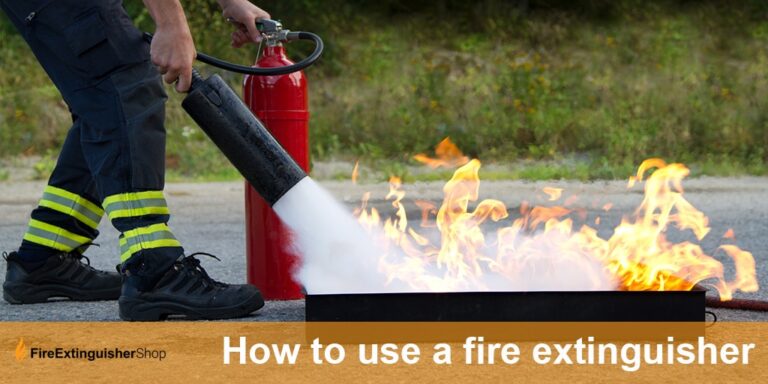
- Workers who may need to use an extinguisher must be trained in how to operate it correctly — the PASS technique (Pull pin, Aim at base, Squeeze handle, Sweep side to side)
- Training should include when NOT to fight a fire — if the fire is too large, spreading, producing heavy smoke, or blocking the exit route, workers should evacuate immediately and call 000
- First-response training is recommended every 2 years; more frequently for higher-hazard workplaces
- Records of training must be kept
Frequently Asked Questions
How many fire extinguishers does my workplace need?
There is no single fixed rule — AS 2444-2001 requires a risk-based assessment of each workplace based on the hazards present, building layout, and travel distances. A licensed fire protection technician must assess your premises and determine the number, type and placement of extinguishers required. As a starting point: extinguishers should be placed so that no point in the workplace is more than approximately 15 metres from the nearest appropriate extinguisher.
Do I need a fire extinguisher in my office?
Yes — virtually all Australian workplaces require at least one fire extinguisher. An office is a low-hazard environment (Class A and E risks) so an ABE powder extinguisher is usually sufficient for general areas. If your office has a server room or comms equipment, a CO2 extinguisher is recommended for that area. If there is a kitchen or lunch room with a cooktop, a wet chemical extinguisher and fire blanket are required near the cooking appliance.
Can I service my own fire extinguisher?
The monthly visual check can be done by any responsible person in the business. The 6-monthly service inspection and 5-yearly pressure test must be carried out by a licensed fire protection technician. Attempting to service a pressurised extinguisher without the correct training and equipment is dangerous and will void any compliance status.
What is the difference between ABE and CO2 extinguishers?
ABE (dry chemical powder) extinguishers cover Class A, B, and E fires — the most versatile type for general workplaces. CO2 extinguishers cover Class B and E fires only but leave no residue, making them the preferred choice where extinguisher use could damage sensitive electronic equipment (server rooms, data centres, comms rooms). For most workplaces, ABE is the standard and CO2 is used in specific areas alongside it.
My business is in Queensland — do the WHS requirements differ from other states?
The core WHS duties (providing and maintaining fire safety equipment, emergency planning, training) are the same across all states that have adopted the model WHS Act — including QLD, NSW, SA, ACT, NT and TAS. The Australian Standards (AS 2444, AS 1851) apply nationally. Building-specific requirements (what equipment must be installed) are set by the National Construction Code (NCC) and apply nationally. If you occupy a strata or multi-tenancy building in QLD, see our Queensland Strata Fire Safety Checklist for the additional body corporate obligations under the Fire Services Act 1990.
What type of fire extinguisher is required for a commercial kitchen?
A wet chemical extinguisher is mandatory for commercial kitchens — it is the only type rated for Class F fires (cooking oils and fats). A water or ABE extinguisher applied to a burning deep fryer can cause a violent steam explosion. A fire blanket must also be installed within 2 metres of the cooking appliance. The rest of the kitchen and dining area should also have ABE coverage for Class A risks. This is a non-negotiable requirement under AS 2444.
Sources: Work Health and Safety Act 2011 (Commonwealth model); Work Health and Safety Regulations 2017, Part 3.1; AS 2444-2001: Portable fire extinguishers and fire blankets — selection and location (Standards Australia); AS/NZS 1841: Portable fire extinguishers (product standard); AS 1851-2012: Maintenance of fire protection systems and equipment. State variations verified against Safe Work Australia model legislation. Content sourced and verified via live web search 2026-06-24. This page is a general guide — consult a licensed fire protection technician for requirements specific to your premises.