Strata Fire Safety Checklist for Queensland Buildings (2026)
If you manage or occupy a strata building in Queensland — as a body corporate, building manager, owner or lessee — you are defined as an occupier under the Fire Services Act 1990. That status comes with clear legal obligations around fire safety.
This checklist is based directly on the Queensland Fire Department’s official Fire Safety Management Tool (FSMT), updated September 2025. It covers all major compliance areas under the Fire Services Act 1990 and the Building Fire Safety Regulation 2008. Work through each section at your next inspection and keep the completed checklist with your building’s fire safety records.
RECORDS REQUIRED Items marked with this tag require you to keep written maintenance records and produce them on request from an authorised fire officer. Records must be kept on site for at least 2 years.
Section 1 — Evacuation Routes & Exits
- Evacuation routes are clear of all obstructions — no vehicles, goods, materials, or equipment blocking the path Routes must be at least 1 metre wide. Starts from common areas (corridors, stairways, foyers) — not inside individual units.
- Final exits are clear for at least 2 metres outside the building The area directly outside each exit must be unobstructed — no bins, vehicles or stored items within 2 metres.
- Final exits of any adjoining tenancies or buildings are also unobstructed You must not obstruct the final exit of an adjoining building or tenancy.
- Exit door hardware is the correct type — lever handles or panic bars only Knob-type handles are not acceptable on exit doors. Doors must open with a single-handed downward or pushing action. Barrel bolts must be locked open when the building is occupied.
- All doors along evacuation routes are unlocked and unobstructed when people are in the building
Fire Services Act 1990 | Building Fire Safety Regulation 2008, ss 5–12
Section 2 — Fire/Smoke Doors & Walls
- Fire and smoke doors are unobstructed and undamaged Fire doors must not be propped or chocked open. They must automatically close and fully latch after each opening. Exception: doors held open by a fire alarm-connected device approved by a building certifier.
- Maintenance records for fire/smoke doors can be produced on request RECORDS REQUIRED Class 5, 6, 9a and 9c buildings: 6-monthly inspections. All other buildings: annual inspections. Records must be kept by a licensed technician.
- Fire/smoke walls are free from unprotected penetrations Any penetrations (e.g. from air conditioning or electrical work) must be sealed with fire-rated compound. Maintain a penetrations register.
Building Fire Safety Regulation 2008, ss 13, 50 | Queensland Development Code MP 6.1
Section 3 — Evacuation Signs & Diagrams
- Evacuation signs/diagrams are in place for the building Required for all buildings with a total floor area greater than 300 m². Each diagram must show: “You Are Here” marker, nearest exit route, all exits, firefighting equipment locations, break-glass alarm locations, assembly area, and route to the assembly area.
- Signs are securely fastened (screws or strong double-sided tape — not sticky tape or blu-tac) and correctly orientated to the building layout
- Signs are displayed at each evacuation route location — stairwell entries, lift lobbies, corridors
- Accommodation unit evacuation signs are in place in all non-owner-occupied units (holiday apartments, serviced apartments, hotel/motel rooms) Must show: evacuation route from the unit, nearby firefighting equipment, break-glass alarm locations, and evacuation procedure. Must be securely fastened inside the unit or on the inside of the front door.
Building Fire Safety Regulation 2008, ss 18, 29, 30, 47, 48
Section 4 — Occupancy Limits
- Steps are in place to ensure the building is not overcrowded Maximum occupancy is set by NCC/BCA Clause D2D18 based on building type and floor area. A building certifier can advise on the specific number for your building.
- If an Occupancy Notice has been issued by the QFD Commissioner, the building is compliant and occupancy numbers are actively monitored
Building Fire Safety Regulation 2008, ss 14–16, 34 | Fire Services Act 1990, ss 147M–147R
Section 5 — Exit Signs & Emergency Lighting
- All exit signs and emergency lighting are undamaged — covers clean, in place and unbroken, lamps functioning
- Maintenance records for exit signs and emergency lighting can be produced on request RECORDS REQUIRED A log book (electronic is acceptable) must record 6-monthly and annual inspections. Maintenance must be conducted by a licensed electrician or appropriately qualified person.
Building Fire Safety Regulation 2008 | AS/NZS 2293
Section 6 — Fire Extinguishers
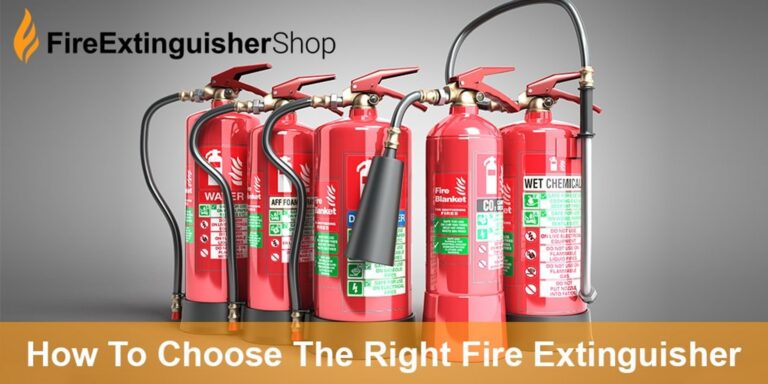
- All prescribed fire extinguishers are correctly maintained in accordance with Queensland Development Code MP 6.1 Prescribed extinguishers are those required to be installed in the building under the applicable code. Maintenance must be carried out by an appropriately licensed fire protection technician.
- Maintenance records for fire extinguishers can be produced on request RECORDS REQUIRED Records must cover 6-monthly, yearly and 5-yearly maintenance. The maintenance tag or invoice alone is not acceptable as a record of maintenance — a full record of maintenance is required (see Record Keeping section below). Evidence of any defect rectification must also be kept.
Building Fire Safety Regulation 2008 | QDC MP 6.1 | AS/NZS 1841
Need to Replace Extinguishers in Your Strata Building?
We supply AS/NZS 1841-compliant fire extinguishers for all strata building types — ABE powder for car parks and common areas, CO2 for electrical rooms, wet chemical for kitchen areas. Free shipping on orders over $199 to Sydney, Melbourne, Brisbane, Perth and Canberra.
Shop Fire ExtinguishersSection 7 — Fire Hose Reels
- All prescribed fire hose reels are correctly maintained in accordance with QDC MP 6.1 Maintenance must be carried out by an appropriately licensed person at 6-monthly and annual intervals.
- Maintenance records for fire hose reels can be produced on request RECORDS REQUIRED The maintenance tag or invoice alone is not acceptable. A full record of maintenance is required.
Building Fire Safety Regulation 2008 | QDC MP 6.1 | AS 2441
Section 8 — Fire Detection & Alarm System
- The fire detection and alarm system is operating with no isolations or faults showing on the panel No zones should be isolated or showing a fault unless maintenance is actively being carried out in that area, with a plan to reinstate the zone in place.
- Maintenance records for the fire detection and alarm system can be produced on request RECORDS REQUIRED A log book recording monthly inspections is required. Maintenance must be conducted by an appropriately qualified person.
- If the alarm system is not monitored by QFR, signage at each manual call point states “LOCAL ALARM ONLY — In case of fire break glass AND ring 000”
- The number of unwanted alarm activations in the current financial year does not exceed 4 (or the prescribed average, whichever is greater)
- If a Class 2 accommodation building: hard-wired smoke alarms with battery backup are installed in each sole occupancy unit Required for all accommodation buildings built since 1 July 1997. Photoelectric type recommended. Must comply with AS 3786-2014. Smoke alarms within individual lots are the owner’s responsibility — not the body corporate’s — unless the body corporate has taken on that obligation.
Fire Services Act 1990, ss 146N, 147Y | Building Fire Safety Regulation 2008, ss 21–25
Section 9 — Evacuation System
- The evacuation system (warning, control and intercommunication) is set to “Auto” mode with no zones isolated or showing a fault
- Maintenance records for the evacuation system can be produced on request RECORDS REQUIRED
Building Fire Safety Regulation 2008, ss 26–27
Section 10 — Sprinkler System
- The sprinkler booster installation cabinet and components are undamaged — hand wheels fitted to inlets and outlets
- Maintenance records for the sprinkler system can be produced on request RECORDS REQUIRED Log book records of maintenance inspections required. An appropriately qualified person must conduct inspections.
Building Fire Safety Regulation 2008, ss 28–29 | QDC MP 6.1
Section 11 — On-Site Hydrant System
- The on-site fire hydrant booster installation is undamaged — cabinet and internal components intact, hand wheels fitted
- On-site fire hydrants are undamaged — not bent or creased, hand wheels fitted
- Maintenance records for the hydrant system can be produced on request RECORDS REQUIRED All maintenance including the 5-yearly hydrostatic test must be recorded on Form 72 (available from the QLD Department of Housing and Public Works).
Building Fire Safety Regulation 2008, ss 30–32 | QDC MP 6.1
Section 12 — Other Prescribed Systems
The following systems apply only to certain building types. If installed, maintenance records must be kept and produced on request.
- Hydrant/sprinkler pumpsets: correctly maintained, records available RECORDS REQUIRED
- Stairwell pressurisation: maintenance records available RECORDS REQUIRED
- Smoke and heat ventilation systems: maintenance records available RECORDS REQUIRED
- Standby power supply (where installed): maintained per manufacturer’s recommendations, records available RECORDS REQUIRED
- Emergency lift — fire service controls (buildings above 25m effective height): annual operational test conducted, records available RECORDS REQUIRED
Building Fire Safety Regulation 2008, ss 33–38 | QDC MP 6.1
Section 13 — Critical Defects
- If a Critical Defect Notice has been received from a licensed technician, rectification action has been taken within one month A Critical Defect Notice is issued when a fire safety installation has a defect that makes it inoperable or poses a direct risk to occupant safety. The technician must notify the occupier within 24 hours of identifying the defect.
- If a Critical Defect Notice has been received, interim protective measures have been put in place for occupant safety while repairs are arranged
Building Fire Safety Regulation 2008, ss 49, 53 | Fire Services Act 1990, s 146M
Section 14 — Housekeeping
- No excessive flammable materials stored under buildings or stairways
- No tripping hazards (lifting tiles, power cords, etc.) on evacuation routes
Fire Services Act 1990, s 145G
Section 15 — Fire & Evacuation Plans
- A written fire and evacuation plan is in place for the building Required for all buildings except Class 1a and Class 10. Can be a hard copy or electronic, but must be available on request in the building.
- For multi-occupancy strata buildings: both a managing entity plan (body corporate) and secondary occupier plans are in place and complement each other The body corporate is responsible for common areas. Each individual occupier/tenant is responsible for their own tenancy. Both plans must work together.
- The fire and evacuation plan contains all required information including: evacuation diagram, building address, owner/occupier contact details, evacuation coordination procedures, firefighting equipment operating instructions, names of persons responsible for carrying out evacuation, and dates of appointment
- The plan reflects any performance solutions for the building (if applicable)
- A procedure is in place to evacuate persons with special needs (disability, children, persons affected by medication)
- All fire and evacuation plans are available for inspection, free of charge, on request during business hours
- Plans are reviewed annually and updated within one month of any building changes RECORDS REQUIRED Record the review process and keep it with the plan. Update the plan within one month of any refurbishment or change of use.
Building Fire Safety Regulation 2008, ss 21–28
Section 16 — Evacuation Instruction & Practice
- General evacuation instructions have been given to all workers within 2 days of commencing work and then annually RECORDS REQUIRED Covers: location of fire safety reference points (exits, alarms, assembly area) and evacuation procedure. No formal qualification required to deliver these instructions.
- First-response evacuation instructions have been given to all workers within 1 month of commencing work and then every 2 years RECORDS REQUIRED Covers: how to operate manual fire alarms and firefighting equipment. Can be delivered via practical training, video/online format. No formal qualification required.
- Evacuation coordination instructions have been given to persons responsible for carrying out the evacuation annually and within 1 month of any changes RECORDS REQUIRED Covers: alerting occupants, calling 000, arranging evacuation including persons with special needs, accounting for all persons, meeting the fire service on arrival.
- An annual evacuation practice (drill) has been conducted RECORDS REQUIRED Records must include: date, start and end time, and any action taken or required as a result of the drill.
- If the building employs 30 or more workers, or is an accommodation building over 25m effective height: a Fire Safety Adviser (FSA) has been appointed The FSA must hold a current building fire safety qualification (8 competencies completed within the previous 3 years). Contact details and qualifications must be included in the fire and evacuation plan.
Building Fire Safety Regulation 2008, ss 32–46 | Fire Services Act 1990, s 146O
Section 17 — Record Keeping
- Approval documents are obtained and kept on site For buildings built from 1 July 1997: Certificate of Classification/Occupancy + list of fire safety installations. For buildings built before 1 July 1997: Certificate of Classification/Occupancy or Certificate of Approval (or written evidence of having requested them) + list of fire safety installations.
- The Certificate of Classification/Occupancy is displayed conspicuously near the main entrance (applies to all buildings approved after 1 July 1997, except Class 1a)
- An annual Occupier Statement for all fire safety installations has been submitted to the QFD Commissioner RECORDS REQUIRED Submit by email to [email protected]. A copy must be retained on site. Any Critical Defect Notices received during the year must be attached. Template available in QDC MP 6.1.
- All required records are kept on site and available for inspection RECORDS REQUIRED Prescribed documents — maintenance records, evacuation instruction records, drill records, fire and evacuation plan review records — must be kept on site for at least 2 years. In Class 2/3 buildings without common areas, records may be kept in lockable metal storage boxes on the building exterior.
- A copy of all prescribed documents is also kept in a separate location (can be electronic)
Building Fire Safety Regulation 2008, ss 55, 55A, 55B, 71, 72, 86 | Building Act 1975, s 108A | QDC MP 6.1
What to Do When Equipment Fails an Inspection
If a fire extinguisher or other system fails a service inspection, the licensed technician must issue a Critical Defect Notice if the defect makes the system inoperable or poses a safety risk. The defect must be rectified within one month. Interim protective measures may be required in the meantime.
For strata buildings replacing multiple extinguishers, purchasing directly from a fire equipment supplier is significantly cheaper than buying through a service contractor. You can then have a licensed technician install and commission them on their next scheduled visit.
Replace Extinguishers in Your Strata Building
AS/NZS 1841-compliant extinguishers for Australian strata buildings. ABE powder, CO2, and wet chemical — all with free shipping over $199.
View Fire ExtinguishersFrequently Asked Questions
Who is responsible for fire safety in a QLD strata building?
Under the Fire Services Act 1990, the occupier of the building is responsible — this includes the body corporate (for common areas), building managers, owners and lessees. In multi-occupancy strata buildings, the body corporate is responsible for common areas (corridors, car parks, foyers, stairwells) and each individual occupier is responsible for their own tenancy. Both sets of fire and evacuation plans must complement each other.
How often do fire extinguishers need to be serviced in a QLD strata building?
Every 6 months by an appropriately licensed fire protection technician, in accordance with Queensland Development Code MP 6.1. A full record of maintenance must be kept — not just the service tag. A 5-yearly extended service and pressure test is also required. Between services, a responsible person should visually check each extinguisher — check the gauge, confirm the pin and seal are intact, and confirm nothing is blocking access.
Does our body corporate need to submit an Annual Occupier Statement?
Yes, if you are the occupier of a building with prescribed fire safety installations (which includes almost all strata buildings other than Class 1a houses). The annual Occupier Statement must be submitted to the QFD Commissioner each year confirming all fire safety installations have been maintained. Email to [email protected]. Keep a copy on site. Any Critical Defect Notices from the year must be attached.
Are we required to have a Fire Safety Adviser (FSA) for our strata building?
A Fire Safety Adviser is required if your building is a workplace employing 30 or more workers, or if it is a Class 2 or 3 accommodation building over 25 metres in effective height. The FSA must hold a current qualification (8 competencies completed within the previous 3 years). Their name, contact details and qualification details must be included in the building’s fire and evacuation plan.
If your strata building also functions as a workplace, see our Workplace Fire Extinguisher Requirements guide for WHS Act obligations, AS 2444 placement rules and AS 1851 maintenance requirements that apply to all Australian workplaces.
Can we buy our own fire extinguishers and have them installed by our service technician?
Yes. There is no requirement to purchase extinguishers through your fire service contractor. For strata buildings replacing several extinguishers, purchasing directly from a certified supplier like Fire Extinguisher Shop is often significantly cheaper. Your licensed fire protection technician can install and commission them. Make sure any replacement units are AS/NZS 1841 compliant and the correct type for each location.
Source: This checklist is based on the Queensland Fire Department Fire Safety Management Tool with Advisory Notes (FSMT, effective September 2025), published under Creative Commons Attribution–No Derivatives 4.0 licence. Attribution: State of Queensland (Queensland Fire Department) 2025. Full document: fire.qld.gov.au. This page provides a guide only — it does not constitute legal advice or guarantee full compliance. Consult the Queensland Fire Department and a licensed fire protection practitioner for advice specific to your building.