Kitchen Fire Extinguisher: Which Type Do You Need in Australia?
Cooking fires are the most common cause of house fires in Australia — and the wrong fire extinguisher can make them significantly worse. Throwing water on a burning pan causes a violent steam explosion. A dry powder ABE extinguisher can blast burning oil across the room. Even CO2, while safer than those two, is unlikely to stop a hot oil fire from re-igniting.
If you have a kitchen — residential or commercial — one extinguisher type is the correct choice: wet chemical. Here is what you need to know about selecting, placing, and maintaining it.
Why Most Fire Extinguishers Are Wrong for Kitchens
Cooking fires are Class F fires — fires involving hot cooking oils and fats. They behave differently from other fire types, and most extinguishers are not rated for them.
Water — Never use on a cooking fire
Water on burning oil causes an immediate and violent reaction. The water vaporises instantly, expanding rapidly and spraying burning oil in all directions. This is the most dangerous mistake you can make. Never use a water extinguisher on a cooking fire.
ABE Dry Powder — Ineffective and dangerous in kitchens
ABE powder extinguishers are excellent all-rounders for workshops, vehicles, and warehouses. In kitchens, the force of discharge can splash burning oil and spread the fire. The dense powder cloud also severely reduces visibility, making it difficult to exit safely. ABE is not suitable for Class F fires.
CO2 — Not rated for Class F
CO2 extinguishers can knock back flames temporarily, but they do not cool the oil. Once the CO2 disperses, a hot oil fire will almost certainly re-ignite. CO2 is not recommended as the primary kitchen extinguisher for Class F fires.
The Right Choice: Wet Chemical Fire Extinguishers
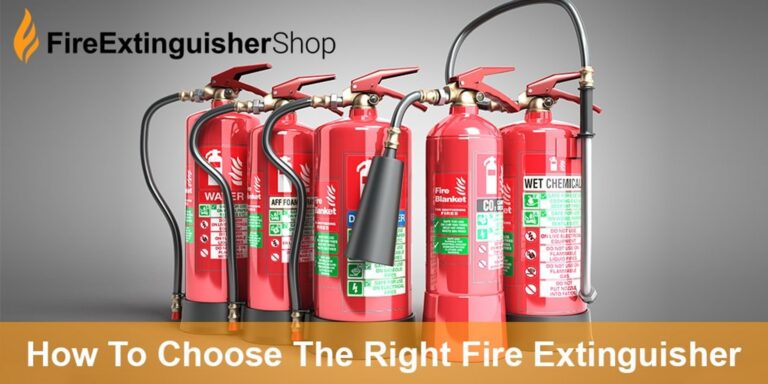
Wet chemical extinguishers are specifically designed for Class F fires. The agent — a potassium-based solution — works in two ways when discharged onto burning oil:
- Saponification: The chemical reacts with the hot oil to form a soapy foam layer that smothers the fire and seals the surface, preventing oxygen from reaching it.
- Cooling: The solution rapidly lowers the temperature of the oil, reducing the risk of re-ignition.
This combination makes wet chemical the only extinguisher type that reliably handles hot oil fires safely. It is also rated for Class A fires (paper, wood, textiles), making it useful beyond just cooking fires.
Shop wet chemical fire extinguishers →
What Size Kitchen Fire Extinguisher Do You Need?
Size requirements differ significantly between residential and commercial kitchens.
| Setting | Recommended Size | Notes |
|---|---|---|
| Domestic kitchen | 2L wet chemical | Suitable for typical household cooking fires. A 2L wet chemical ($99) is the standard recommendation for a home kitchen. |
| Small commercial kitchen | 2L wet chemical | Cafes, small restaurants, food trucks with limited deep fryer capacity. |
| Commercial kitchen | 7L wet chemical | Industry standard for commercial kitchens — required where cooking surface area demands a 3F rating under AS 2444 Clause 4.4.4. Serviced every 6 months under AS 1851. |
If you are unsure what your workplace requires, consult a licensed fire protection technician. AS 2444 specifies minimum extinguisher ratings for different occupancy types.
Where to Place a Kitchen Fire Extinguisher (AS 2444)
Correct placement matters as much as correct selection. Under AS 2444, fire extinguishers in kitchens must be:
- Located between 2 and 20 metres from the cooking appliance
- Mounted with the handle between 100mm and 1200mm from the floor
- Positioned along exit pathways — near the exit, not next to the stove
- Clearly identified with a compliant ID sign visible from 20 metres
The standard recommendation: mount your wet chemical extinguisher near the kitchen exit. If a fire starts on the cooktop, you approach from the exit side — keeping an escape route open.
Do You Also Need a Fire Blanket?
For residential kitchens, a fire blanket is strongly recommended alongside a wet chemical extinguisher. For commercial kitchens, AS 2444 typically requires both.
A fire blanket handles smaller fires quickly — a flaming pan, a toaster, clothing on fire — without any chemical discharge, making it faster and simpler to deploy in a domestic setting.
- 1.2m × 1.2m Fire Blanket — $28 — standard domestic, suits most pans and small appliances
- 1.2m × 1.8m Fire Blanket — $32 — larger coverage for bigger cooktops or woks
Mount the fire blanket on the wall near the exit, alongside the extinguisher.
Servicing Requirements
Commercial properties: AS 1851 requires fire extinguishers to be inspected every 6 months by a licensed fire protection technician, with a comprehensive annual service. Wet chemical extinguishers also require a 5-year recharge regardless of whether they have been used. Keep your service record current — an unserviced extinguisher may be treated as non-compliant during a workplace audit or insurance claim.
Residential: AS 1851 does not apply to home kitchens. Follow the manufacturer’s guidelines — most recommend a 5-year inspection and recharge cycle for wet chemical units, regardless of use.
Frequently Asked Questions
Can I use an ABE extinguisher in my kitchen?
ABE extinguishers are not rated for Class F cooking oil fires. In a kitchen, the force of discharge can splash burning oil and spread the fire. Wet chemical is the correct choice for any kitchen with a cooktop or fryer.
What size wet chemical extinguisher do I need for a home kitchen?
A 2L wet chemical extinguisher is the standard recommendation for a domestic kitchen. It is compact, easy to handle, and rated for the size of fire typically encountered in a household cooking environment.
Does a commercial kitchen need a different extinguisher?
Yes. AS 2444 (Clause 4.4.4) requires the extinguisher F classification to be appropriate to the surface area of the cooking hazard. Commercial fryers have significantly larger cooking surface areas than domestic cooktops, which means a higher F-rated extinguisher is required. In practice, a 7L wet chemical (rated 3F) is the industry standard for commercial kitchens, while a 2L (rated 1F) suits a domestic cooktop. A licensed fire protection technician should confirm the required rating for your specific equipment.
Where should I mount a kitchen fire extinguisher?
Near the kitchen exit — not next to the stove. This keeps your escape route open: you grab the extinguisher on the way to the fire, not after the fire is between you and the door. AS 2444 requires placement between 2 and 20 metres from the cooking appliance.
How often does a kitchen fire extinguisher need to be serviced?
Commercial properties: AS 1851 requires inspection every 6 months and an annual full service by a licensed fire protection technician. Wet chemical units also require a 5-year recharge. Residential: AS 1851 does not apply — follow the manufacturer’s guidelines, typically a 5-year inspection and recharge cycle.
Ready to Buy?
For most homes, a 2L wet chemical and a 1.2m × 1.2m fire blanket is the complete kitchen fire safety setup.