Caravan & Camping Fire Safety Guide Australia
Fire is one of the most serious risks in a caravan, motorhome or campervan. Compact living spaces, LPG gas appliances, electrical connections and cooking in a confined area create a fire environment that can escalate very quickly — and in a remote location, help may be a long way away.
This guide covers the legal fire extinguisher requirements for caravans and motorhomes in Australia, how to choose the right extinguisher, gas safety rules, smoke alarm requirements and what to do during a total fire ban.
Legal Requirements: ADR 44/01 and the Industry Code
Fire extinguisher requirements for caravans and motorhomes in Australia come from two main sources:
| Vehicle type | Requirement | Source |
|---|---|---|
| Motorhomes and campervans | Mandatory. At least one fire extinguisher with minimum 5B rating, mounted in the living space, no higher than 1.2m from floor, readily visible and accessible. Must comply with AS 2444. | Vehicle Standard (ADR 44/01) |
| Caravans, pop-tops, camper trailers, slide-ons | Minimum 1kg extinguisher required under the Caravan Industry Association of Australia Code of Practice. Located to enable safe access in an emergency, supported by a bracket that withstands towing forces. | CIAA Code of Practice (references AS 2444) |
| All vehicle types | Extinguisher selection and placement must comply with Australian Standard AS 2444 — Portable fire extinguishers and fire blankets: selection and location. | AS 2444-1985 (referenced by ADR 44/01 and CIAA) |
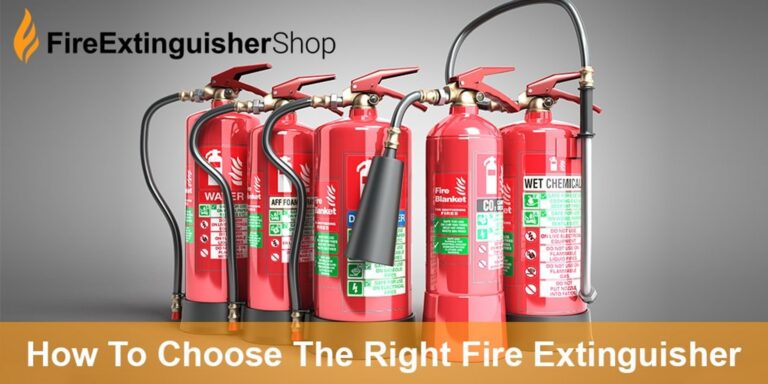
Which Type of Fire Extinguisher Does a Caravan Need?
The fire risks in a caravan or motorhome span multiple fire classes, so the extinguisher type matters:
| Fire class | What it covers in a caravan | Covered by ABE powder? |
|---|---|---|
| Class A | Bedding, curtains, upholstery, timber, plastics | ✅ Yes |
| Class B | LPG gas, petrol, diesel, cooking oils (liquid) | ✅ Yes (not Class F cooking fires — see below) |
| Class E | Electrical fires — wiring, 12V systems, inverters, solar | ✅ Yes |
| Class F | Cooking oil fires (deep frying) | ❌ No — wet chemical or fire blanket required |
Recommended type: ABE dry powder — covers Class A, B and E, which are the most likely fire types in a caravan or motorhome. A fire blanket is a useful addition, particularly near the cooking area, to handle Class F cooking fires and as a means to smother small contained fires without discharging a powder extinguisher into the living space.
1kg vs 2.5kg: Which Size?
1kg ABE
Meets the minimum 1kg requirement. Compact and lightweight — ideal where space and weight are critical. Good for camper trailers and pop-tops. Discharge time approximately 8–10 seconds.
2.5kg ABE
More agent = more time to fight the fire. Better for larger caravans and motorhomes where fires can spread quickly across upholstery and bedding. Discharge time approximately 14–15 seconds. Recommended where weight budget allows.
Fire blanket
Pair with a powder extinguisher. Essential near the cooktop for smothering cooking fires. Does not discharge powder into living space — important in a confined environment.
Extinguishers for Caravans
ABE powder extinguishers rated for caravan use. Includes AS/NZS 1841-compliant extinguisher, service tag, and wall/vehicle bracket.
Shop 1kg ABE Caravan Shop 2.5kg ABEGas Safety in Caravans
LPG gas is one of the biggest fire and explosion risks in a caravan. Gas appliances — fridges, cooktops, hot water systems, heaters — are common in Australian caravans, and gas-related fires account for a significant share of caravan fire incidents. Gas installations in caravans must comply with AS/NZS 5601.2 (LP Gas installations in caravans and boats for non-propulsive purposes). Any new gas installation or modification must be performed by a licensed gas fitter and certified with a Gas System Compliance Certificate.
Key gas safety rules
- Turn off all gas cylinders while towing — gas must be off when the caravan is being towed or the motorhome engine is running.
- Keep gas cylinders outside — cylinders must be in a properly designed external storage compartment. Never store inside the living area.
- Turn off all gas appliances before going to bed — including the fridge if it has a gas mode. Use electric mode overnight where possible.
- Never run gas appliances while moving — this includes the fridge running on gas while travelling.
- Inspect cylinders, pipes and fittings regularly — especially after driving on rough country roads. Vibration can loosen fittings over time.
- Gas cylinders expire — cylinders must be re-certified or replaced after 10 years. Check the test date stamped on the collar.
- Store flammable liquids outside — petrol, methylated spirits, and other flammables must not be stored inside the caravan.
Smoke Alarm Requirements
Smoke alarms in caravans and motorhomes are required by law in several states and territories — and strongly recommended everywhere.
| State | Requirement |
|---|---|
| Queensland | From 1 July 2024: all newly registered or transferred QLD caravans/motorhomes must have a photoelectric smoke alarm on the ceiling, powered by a 10-year non-removable battery, meeting AS 3786-2014. From 1 January 2027: all other QLD registered caravans and motorhomes. Source: QFD Info Sheet — Fire Safety for Caravans and Motorhomes (Ver 07/2024) |
| New South Wales | Compulsory to have a working smoke alarm inside any portable dwelling where sleeping occurs — this includes caravans and camper trailers. One inside the van where the bed is, and one in the annexe if people sleep there. Source: Fire & Rescue NSW |
| All states | Queensland Fire Department and Fire & Rescue NSW both recommend photoelectric smoke alarms for all caravans and motorhomes regardless of state mandate. Photoelectric type is recommended over ionisation for living space use. |
Escape Planning
A caravan fire can fill a small living space with smoke in under two minutes. Knowing your escape route before a fire starts can be the difference between getting out safely and not.
- Know where all escape hatches and emergency windows are — and how to open them. Practice opening them before your first trip in a new van.
- Never obstruct exits or doors — keep the path to the door and any emergency hatches clear at all times.
- Decide on a meeting point — if travelling with family, agree on a spot to meet outside the van so everyone is accounted for.
- Keep keys accessible — if the caravan or motorhome is locked from inside, make sure keys are reachable from the sleeping area.
- Know the campground layout — when arriving at a new site, note where the nearest fire point, water source and campground entrance are.
Campfire and Total Fire Ban Safety
If you’re camping rather than staying in a caravan park, campfire safety is a critical part of fire risk management — particularly during the Australian fire season.
Campfire rules
- Never light a campfire during a Total Fire Ban — this applies to all fires including campfires, fire pits, braziers, chimineas and any fire for warmth or cooking. Penalties are severe and you may be liable for firefighting costs if a fire escapes.
- Check the fire danger rating before lighting any fire — ratings vary by state. CFA (VIC), RFS (NSW), DFES (WA), CFS (SA) and QFD (QLD) all publish daily ratings. Check before you leave camp for the day as conditions can change.
- Never leave a campfire unattended — not even briefly.
- Fully extinguish before going to bed or leaving camp — drown with water, stir the ash, drown again. The fire must be cold to touch.
- Keep a bucket of water or sand at the campfire at all times.
- Do not burn in windy conditions — embers travel further than expected and can ignite surrounding dry grass or scrub.
Electrical Safety
- Check the extension cord condition before every trip — frayed, cracked or damaged 240V leads must be replaced. Do not use a cord that has been run over or kinked.
- Use the correct cord rating for the current load. An undersized lead overheats under load.
- Test the safety switch (RCD) on the 240V circuit before each trip.
- Inspect 12V and solar wiring for loose terminals, corrosion or chafing. Vibration from towing causes wiring to work loose over time.
If you’re towing an electric vehicle or have an EV charging setup at your campsite, see our guide to what to do if an electric vehicle catches fire — EV battery fires burn differently from conventional fires and require a specific response.
Cooking Safety
- Never leave cooking unattended — particularly frying. Cooking is the leading cause of caravan fires.
- Store a fire blanket near the cooktop — use it to smother a cooking oil fire. Never use a powder extinguisher on a hot chip pan; the pressure can spread burning oil.
- Keep clothes, bedding and paper away from the cooking area — confined caravan kitchens have very little clearance between the cooktop and surrounding surfaces and fabrics.
Maintaining Your Caravan Fire Extinguisher
ADR 44/01 and AS 2444 require that fire extinguishers in vehicles be maintained in good working order. A discharged, damaged or out-of-service extinguisher is not compliant — and won’t work in an emergency.
- Check the pressure gauge before every trip — the needle should be in the green zone. If it’s not, have the extinguisher tested or replaced.
- Inspect for damage — check the pin, handle, hose and body for cracks, corrosion or physical damage.
- Annual service by a licensed technician — AS 1851 requires portable fire extinguishers to be inspected and serviced annually by a qualified technician. The technician attaches a dated service tag.
- 5-yearly pressure test (hydrostatic test) — dry powder extinguishers require a hydrostatic test every 5 years to verify the cylinder is still structurally sound under pressure.
- Replace after use — even a partial discharge renders an extinguisher unreliable. Replace or have it recharged promptly after any use.
Ready for Your Next Trip?
AS/NZS 1841-compliant ABE fire extinguishers for caravans, motorhomes and camper trailers. Free shipping on extinguisher orders $199+.
Shop 1kg ABE Shop 2.5kg ABEFrequently Asked Questions
Is it a legal requirement to have a fire extinguisher in a caravan in Australia?
For motorhomes, yes — ADR 44/01 mandates a fire extinguisher meeting a minimum 5B rating, mounted in the living space. For caravans and camper trailers, the Caravan Industry Association of Australia Code of Practice requires a minimum 1kg extinguisher as a compliance standard. Regardless of the strict legal position, a fire extinguisher is strongly recommended safety equipment for any caravan or camping trip — and required by most caravan parks.
What size fire extinguisher should I carry in my caravan?
The minimum under the industry code is 1kg. A 2.5kg ABE gives you roughly double the discharge time — about 14–15 seconds versus 8–10 seconds — which makes a significant difference in a real fire situation. If weight and storage space allow, 2.5kg is the better choice for a larger caravan or motorhome. Keep a fire blanket near the cooktop as well.
Do I need a smoke alarm in my caravan?
Yes — in Queensland, all newly registered or transferred caravans and motorhomes must have a photoelectric smoke alarm from 1 July 2024, with all registered caravans required to comply by 1 January 2027. In NSW, a smoke alarm is compulsory in any portable dwelling where sleeping occurs. Other states strongly recommend them. Use a photoelectric alarm that meets AS 3786-2014 and has a 10-year battery.
Can I run LPG gas appliances while my caravan is being towed?
No. Gas cylinders must be turned off while the caravan is being towed or the motorhome engine is running. Gas must also not be running while moving. Gas appliances — including fridges on gas mode — should be switched to electric or turned off completely during travel.
Can I light a campfire during a Total Fire Ban?
No. During a Total Fire Ban, all fires are prohibited — including campfires, fire pits, braziers, chimineas and any fire for warmth or personal comfort. Check the fire danger rating daily with your state’s fire authority (CFA, RFS, DFES, CFS, QFD) before lighting any fire. Penalties for breaching a Total Fire Ban include significant fines and you may be held liable for the cost of firefighting if a fire escapes.
Sources: Vehicle Standard (Australian Design Rule 44/01); Queensland Fire Department — Fire Safety for Caravans and Motorhomes Information Sheet (Ver 07/2024); Caravan Industry Association of Australia Code of Practice; AS/NZS 5601.2-2020 — LP Gas installations in caravans and boats; Fire & Rescue NSW — Caravans and camping fire safety; AS 2444-1985 — Portable fire extinguishers and fire blankets: selection and location. Sourced via live web search 2026-06-24.