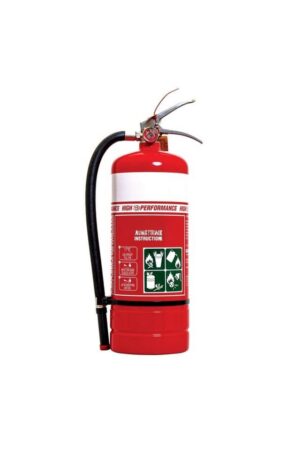
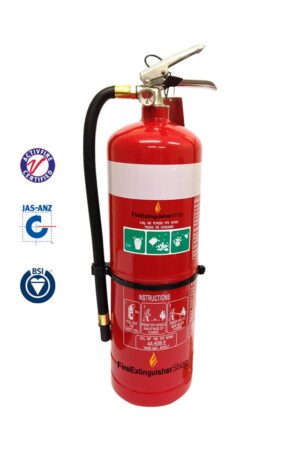
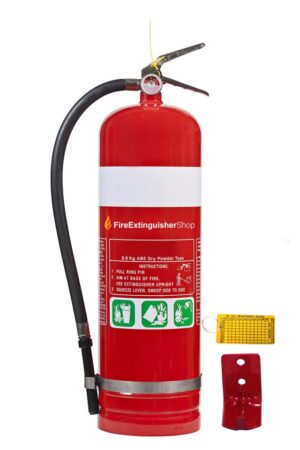
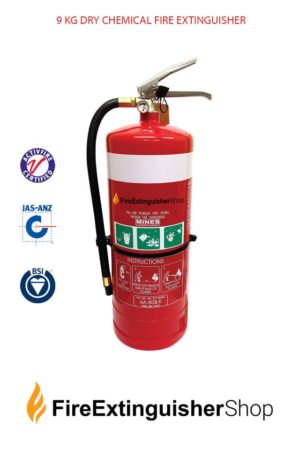
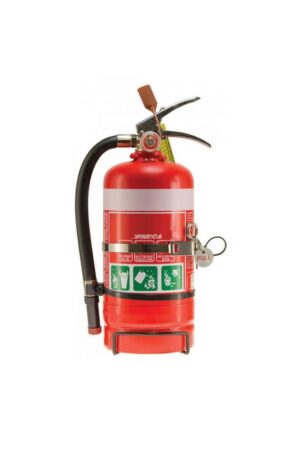
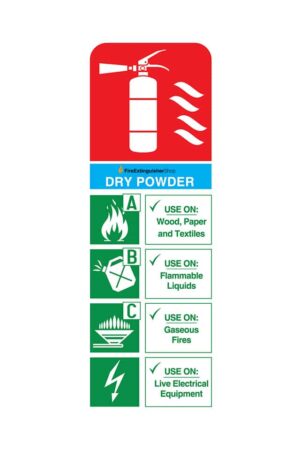
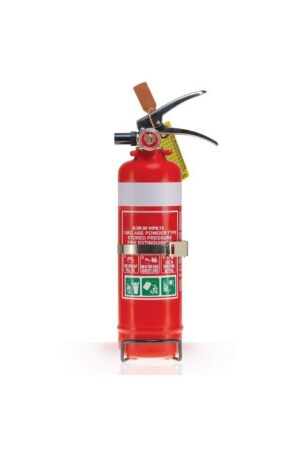
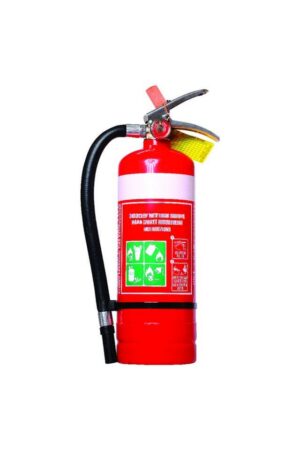
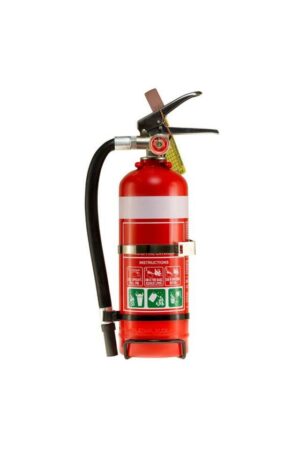
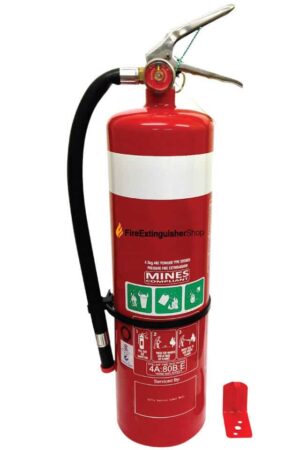
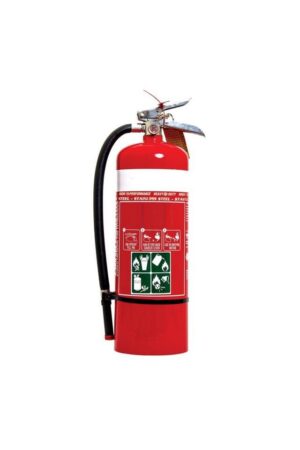
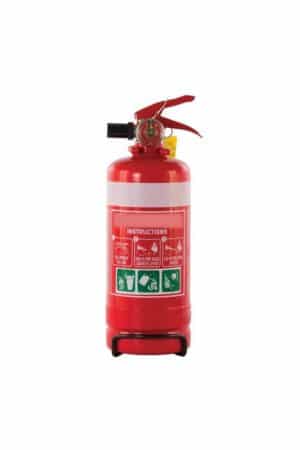
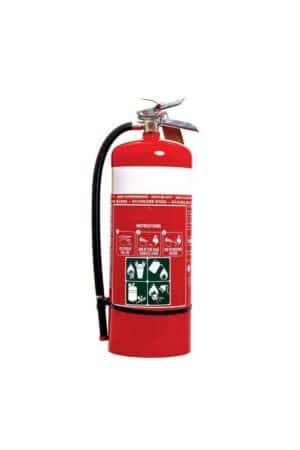
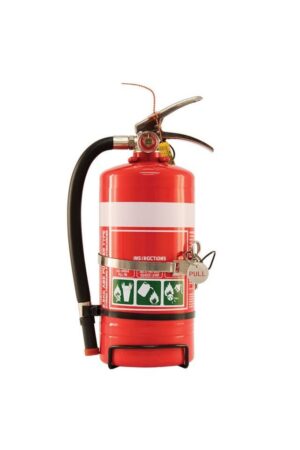
Dry chemical fire extinguishers — also called dry powder or ABE extinguishers — are Australia’s most widely used extinguisher type. They cover Class A, B, and E fires (wood, paper, flammable liquids, and electrical equipment), making them the right choice for most homes, offices, vehicles, and workplaces.
Choosing the right size
Dry chemical extinguishers are available from 1kg to 9kg. Bigger isn’t always better — the right size depends on where it will be mounted and who will use it.
| Size |
Best for |
Discharge time |
| 1kg ABE |
Cars, caravans, boats, kitchen drawers |
~8 sec |
| 1.5kg–2.5kg ABE |
Home garages, small offices, light commercial vehicles |
~10 sec |
| 4.5kg ABE |
Standard workplace and home size — covers most rooms |
~14 sec |
| 9kg ABE |
Large commercial and industrial environments, plant rooms |
~20 sec |
What fires can a dry chemical extinguisher put out?
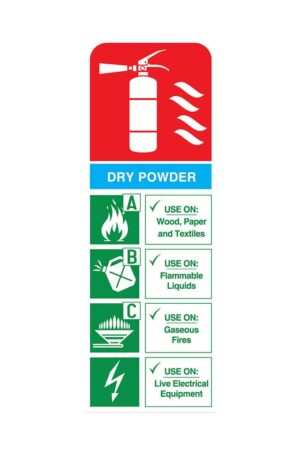
ABE-rated dry powder extinguishers are effective on three fire classes:
- Class A — ordinary combustibles: wood, paper, cardboard, fabric, and plastics
- Class B — flammable and combustible liquids: petrol, oil, paint, and solvents
- Class E — electrical equipment: switchboards, wiring, appliances, and machinery
Note: dry powder is not suitable for Class F fires (cooking oils). For kitchen fires, see our wet chemical extinguishers.
Compliance and servicing
All dry chemical fire extinguishers in this range comply with AS/NZS 1841 (portable fire extinguishers standard). In Australia, fire extinguishers must be inspected every 6 months and pressure-tested every 5 years under AS 1851. A licensed fire protection technician is required for servicing.
Frequently asked questions
What colour band does a dry chemical fire extinguisher have?
Dry chemical (ABE powder) extinguishers have a white band on the body, as specified by AS 1841. The body itself is red — the coloured band identifies the agent type at a glance.
What is inside a dry powder fire extinguisher?
ABE-rated extinguishers contain monoammonium phosphate — a fine chemical powder that smothers flames and interrupts the combustion chain reaction. BE-rated units use sodium bicarbonate (baking soda compound). Most extinguishers sold in Australia are ABE-rated.
Do dry chemical extinguishers work on electrical fires?
Yes — ABE extinguishers are rated for Class E (electrical) fires. However, switch off the power at the source if safe to do so before discharging. Powder residue can damage sensitive electronics — for server rooms or data centres, consider a CO2 extinguisher instead.
What size fire extinguisher do I need for my workplace?
For most commercial premises, a 4.5kg ABE extinguisher is the standard requirement under the Building Code of Australia and AS 1851. One extinguisher per 200m² of floor area is a common guideline — your fire safety inspector can confirm the exact requirement for your space.
How often does a dry chemical extinguisher need servicing?
Every 6 months for a basic inspection, and a full maintenance service every 5 years (including internal inspection and hydrostatic pressure test), as per AS 1851. A licensed fire protection technician must carry out the service.