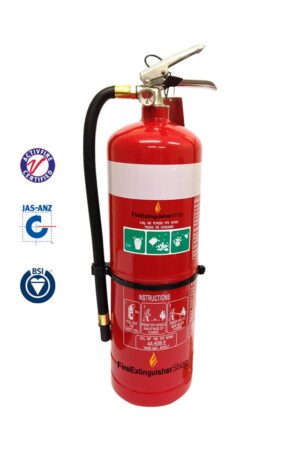
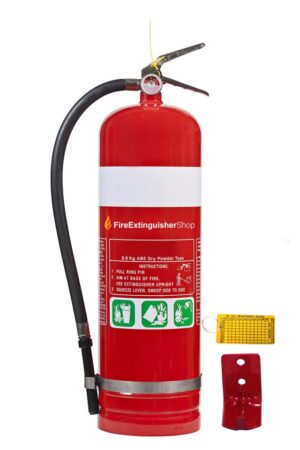
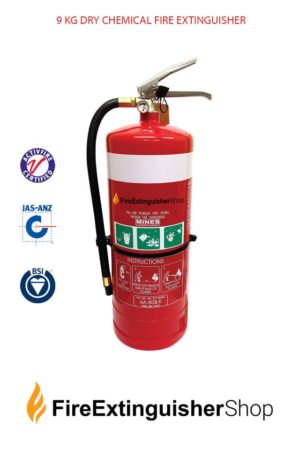
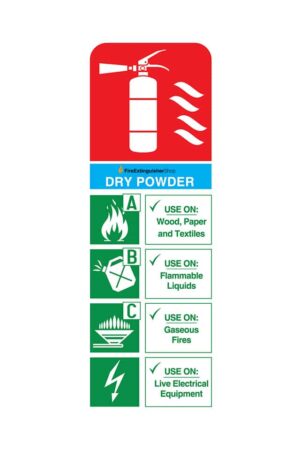
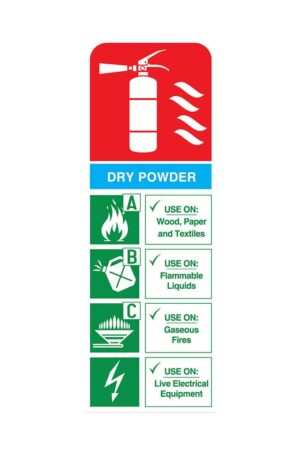
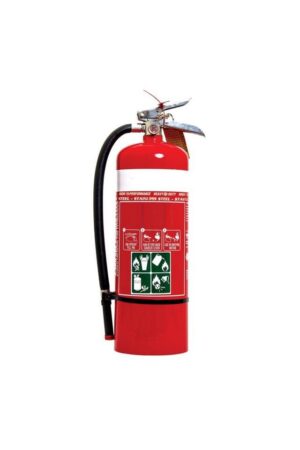
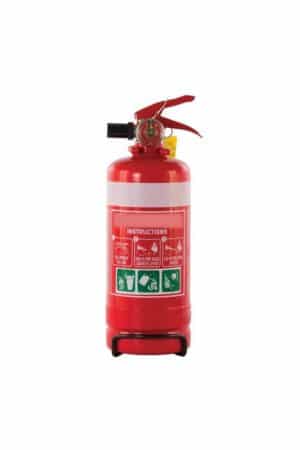
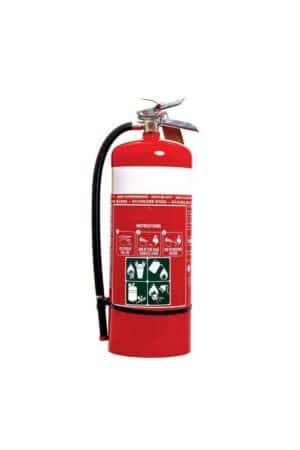
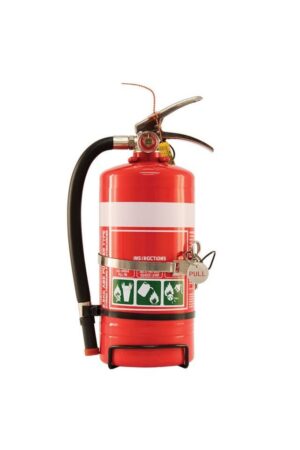
ABE fire extinguishers are the most widely used portable fire extinguisher in Australia — and for good reason. A single ABE unit covers Class A fires (wood, paper, fabric), Class B fires (petrol, oils, flammable liquids), Class C fires (flammable gases including LPG), and Class E fires (live electrical equipment). That four-in-one coverage makes ABE the standard choice for homes, offices, vehicles, and warehouses across the country. All models are certified to AS/NZS 1841 and sold with a wall bracket unless otherwise stated. From $22.90.
ABE vs BE — What’s the Difference?
ABE dry chemical extinguishers contain monoammonium phosphate powder, which is effective on Class A, B, C, and E fires. BE extinguishers use a different compound — sodium bicarbonate or potassium bicarbonate — rated for Class B and E only, with no Class A coverage. For most applications — homes, offices, vehicles — ABE is the right choice. BE extinguishers are used in specific settings where Class A hazards are absent and Class B performance needs to be maximised.
ABE Fire Extinguisher Size Guide
| Size |
Rating |
Best For |
Price From |
| 1kg ABE |
1A:10B:E |
Cars, motorcycles, caravans, small boats — minimum vehicle size |
$22.90 |
| 1.5kg ABE |
1A:10B:E |
Cars, SUVs, small spaces |
$40.00 |
| 2kg ABE |
2A:20B:E |
Vehicles, small offices, apartments |
$50.00 |
| 2.5kg ABE |
3A:20B:E |
Home, small office, 4WD — most popular residential size |
$45.00 |
| 4.5kg ABE |
6A:40B:E |
Garage, workshop, small commercial, light industrial |
$57.00 |
| 9kg ABE |
10A:60B:E |
Warehouse, large commercial, industrial — AS 2444 standard for commercial premises |
$90.00 |
A higher A and B rating means a larger certified fire can be extinguished. For residential use, 2.5kg is the practical minimum. For commercial and industrial premises, 4.5kg is the most common unit and 9kg is the AS 2444 standard for most floor areas.
Standard vs High Performance vs Stainless Steel
Our ABE range includes three specification tiers:
- Standard ABE — AS/NZS 1841 certified, powder-coated red cylinder, wall bracket included. Best value for most residential and light commercial use.
- High Performance ABE — Higher fire rating per kilogram of agent. A 4.5kg HP unit delivers the performance of a standard 6kg unit in a lighter, more compact cylinder. Ideal where weight or space matters — plant rooms, marine, vehicles.
- Stainless Steel ABE — Same agent and ratings as standard, with a brushed stainless steel cylinder. Resists corrosion in coastal, high-humidity, and food-processing environments. Also used for prestige installations in commercial lobbies and high-end fitouts.
Australian Standards and Compliance
- AS/NZS 1841 — All extinguishers in our range are certified to this standard, which governs product design, agent quality, colour banding (white band = dry chemical), and performance ratings.
- AS 2444 — Governs extinguisher selection and placement in commercial buildings. For most floor areas, this standard requires a minimum 4.5kg ABE with units spaced no more than 15 metres apart.
- AS 1851 — Maintenance standard. All installed extinguishers must be serviced every 6 months by a licensed fire protection technician and pressure-tested at 5-year intervals.
Frequently Asked Questions
What is an ABE fire extinguisher used for?
ABE extinguishers are used on Class A fires (wood, paper, fabric), Class B fires (flammable liquids including petrol and oils), Class C fires (flammable gases including LPG), and Class E fires (live electrical equipment). They are the most versatile portable extinguisher available and the most commonly installed type in Australian homes, offices, and commercial buildings.
What does ABE stand for?
ABE refers to the fire classes the extinguisher is rated for: A (ordinary combustibles), B (flammable liquids), and E (electrical equipment). The agent used is monoammonium phosphate dry chemical powder.
What size ABE extinguisher do I need at home?
A 2.5kg ABE is the minimum recommended size for most Australian homes. It covers the main residential fire risks — kitchen fires (Class A), garage/workshop fires (Class B), and electrical fires (Class E). Mount it outside the kitchen on the path to the exit door. If you have a garage or workshop, add a second unit there.
How often does an ABE fire extinguisher need servicing?
Every 6 months, by a licensed fire protection technician under AS 1851. You should also check the pressure gauge monthly — if the needle is in the red zone, the unit needs recharging immediately. Dry powder extinguishers should also be inverted and shaken periodically to prevent the powder from compacting and caking.
Can I use an ABE extinguisher on a cooking oil fire?
No. ABE dry chemical is not rated for Class F fires (cooking oils and fats). The forceful discharge can splash burning oil outward, significantly spreading the fire. Use a wet chemical extinguisher or a fire blanket for cooking oil fires.