Fire safety cabinets protect and display fire extinguishers, fire hose reels, and essential services log books in commercial, industrial, and public buildings. A properly specified cabinet keeps equipment protected from weather, dust, and tampering while remaining instantly accessible in an emergency. Our range covers single and double extinguisher cabinets, hose reel cabinets, and log book cabinets in steel, plastic, fibreglass, and stainless steel. From $16.
Cabinet Types
Fire Extinguisher Cabinets
Single and double extinguisher cabinets in a range of materials and sizes, sized to suit 2.5kg through to 9kg extinguishers. Options include UV-resistant powder-coated steel, UV-treated plastic, fibreglass (coastal and outdoor), and stainless steel. All feature break-glass or push-lock door mechanisms for emergency access. Browse the full range in Fire Extinguisher Cabinets →
Fire Hose Reel Cabinets
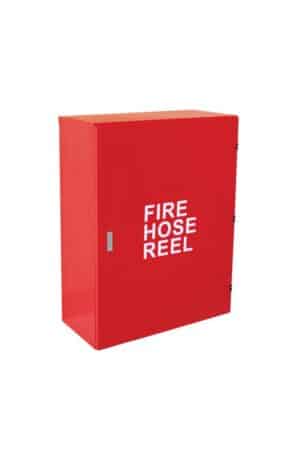
Hose reel cabinets house a complete fire hose reel assembly — protecting the reel, hose, and fittings from dust and UV damage while maintaining an accessible, compliant installation. Available with 003 key lock or push-lock door. Required in some commercial installations under AS 2441 where the hose reel is in a publicly accessible area. From $453.
Essential Services Log Book Cabinet
A dedicated lockable cabinet for the essential services maintenance log book, required on all commercial buildings with fire protection systems. The log book records all fire safety inspections, tests, and services under AS 1851. A separate lockable cabinet protects the log book from loss, damage, and unauthorised alteration. From $100.
Choosing the Right Cabinet Material
| Material |
Best For |
Notes |
| Powder-coated steel |
Indoor, covered outdoor, standard commercial |
Most durable for indoor use; surface rust risk in direct outdoor exposure |
| UV-treated plastic |
Semi-exposed locations, budget installations |
Lightweight, UV-rated; not as robust as steel for high-impact areas |
| Fibreglass |
Coastal, outdoor, marine, chemical environments |
Excellent corrosion resistance; preferred for outdoor installations near the sea |
| Stainless steel |
Food processing, marine, prestige fitouts |
Maximum corrosion resistance; highest cost; specified for hygiene-critical areas |
Compliance Notes
Fire extinguisher cabinets must not impede rapid access to the extinguisher. Break-glass panels are the preferred door mechanism for public areas. Key-locked cabinets are acceptable in areas where staff have ready access to keys, but are not suitable as the sole access method in public buildings. Cabinet placement and visibility must comply with AS 2444 (selection and placement) and signage requirements under AS 2444.
Frequently Asked Questions
Do fire extinguisher cabinets need to be unlocked?
In public or common areas, extinguisher cabinets must be readily accessible in an emergency. Break-glass panels (where the glass is broken to open the door) are the standard for public areas. Key-locked cabinets are acceptable in areas where keys are immediately accessible to all occupants, but fire safety regulations prohibit locking extinguishers in a way that delays access during a fire.
What size cabinet do I need for a 4.5kg extinguisher?
A medium single cabinet (typically labelled 4.5kg) is the right size for standard 4.5kg dry chemical or CO2 extinguishers. For a 9kg extinguisher, use a large single cabinet. If mounting two extinguishers side by side — common where both an ABE and CO2 are required — use a double cabinet. Check the internal cabinet dimensions against your extinguisher body diameter before ordering.
Are fire extinguisher cabinets required by Australian Standards?
Cabinets are not universally mandated by AS 2444, but they are required in certain environments — outdoor installations, food preparation areas, car parks, and anywhere the extinguisher would be exposed to weather or risk of physical damage. A fire safety assessor can advise on whether cabinets are required for your specific building and premises type.