Exit signs and combined exit and emergency lights mark the location of emergency exits and evacuation routes in commercial and public buildings. Under the National Construction Code and AS/NZS 2293, exit signage is mandatory in most commercial, industrial, and multi-residential buildings — occupants must be able to see an exit sign from any point along an escape route. From $20.
Exit Sign Options
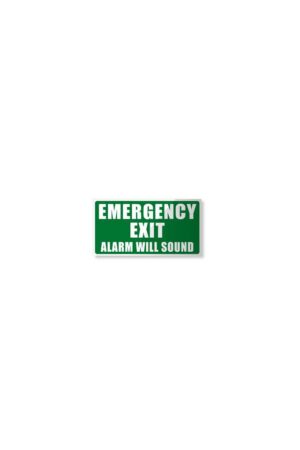
Emergency Exit Sign ($20)
A static, non-illuminated exit sign for low-risk areas that have adequate general lighting during an emergency. Suitable for secondary signage, ancillary exit marking, and areas where illuminated signs are not required by AS/NZS 2293. Meets standard safety sign requirements for conspicuity and wording under AS 1319.
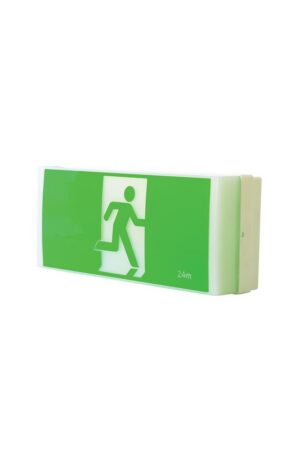
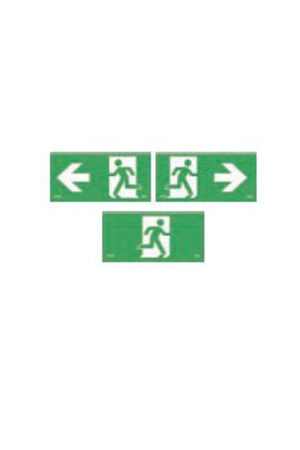
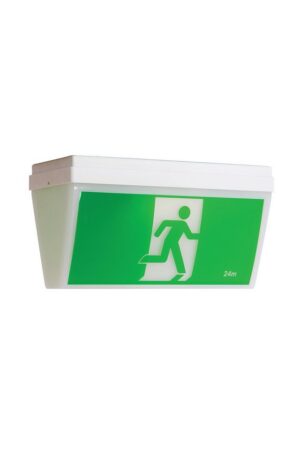
LED Combination Exit and Emergency Light ($132)
A single fitting that combines a maintained exit sign with an integrated emergency light — both functions in one unit, with a single cable connection and single battery backup. Available in ceiling mount and wall mount configurations. Ideal for small commercial premises, offices, and retail tenancies where minimising fixture count is important. 90-minute battery backup as required by AS/NZS 2293.
For a wider range of standalone exit lights, recessed models, and blade-style fittings, see our full Exit Lights range →
When Is an Illuminated Exit Sign Required?
Under AS/NZS 2293 and the National Construction Code (NCC), illuminated exit signs are required in all Class 2–9 buildings — which covers most commercial, industrial, multi-residential, and public buildings. Specific triggers include:
- Any exit that is not clearly identifiable as an exit from within the building
- Any exit in an area where artificial lighting is required during normal occupancy
- All stairwell exit doors in multi-storey buildings
- Any area where the path to an exit is not immediately obvious
Static non-illuminated signs are only acceptable in limited situations — typically as supplementary signage in well-lit, low-occupancy areas where the exit is clearly visible. A licensed fire protection technician or building certifier can advise on what’s required for your specific building class and layout.
Compliance
- AS/NZS 2293.1 — Design and installation of emergency lighting and exit signs, including minimum luminance levels and visibility requirements
- AS/NZS 2293.2 — Inspection and maintenance — monthly functional test and annual full 90-minute discharge test, with records kept on site
- AS 1319 — Safety signs for the occupational environment — covers wording, colour, and pictogram requirements for exit signage
Frequently Asked Questions
Do exit signs need to be illuminated?
In most commercial buildings, yes. Under AS/NZS 2293 and the NCC, exit signs in commercial, industrial, and multi-residential buildings must be illuminated (maintained) so they are visible at all times — including during a power failure. Static non-illuminated signs are only acceptable in specific low-risk situations. For most buildings, an LED illuminated exit sign or a combined exit and emergency light fitting is required.
What is the difference between an exit sign and an emergency light?
An exit sign marks the location of an emergency exit — it must always be visible and points occupants toward the door. An emergency light illuminates the corridor, stairwell, or floor area between exits so occupants can navigate to the exit in the dark. Both are required in most commercial buildings under AS/NZS 2293. A combination exit and emergency light fitting provides both functions in a single unit.
How often do illuminated exit signs need to be tested?
Under AS/NZS 2293.2: a 2–5 second functional test monthly and a full 90-minute discharge test annually. All test results must be logged in a maintenance record kept on site. Testing can be carried out by a licensed electrician or fire protection technician.