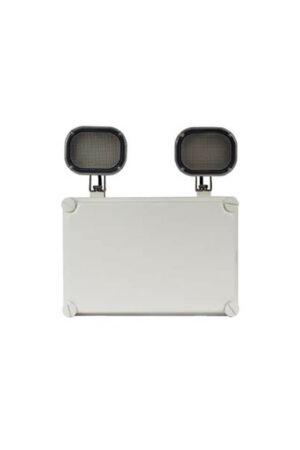
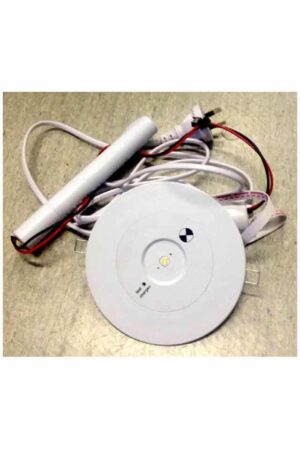
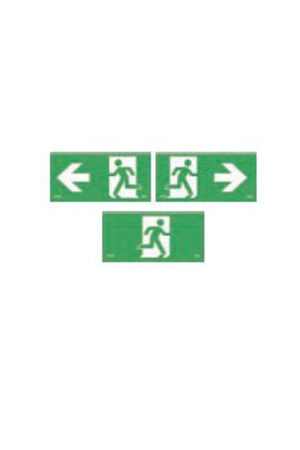
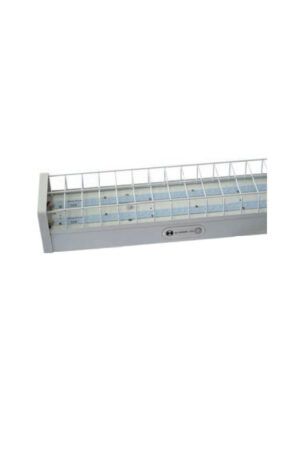
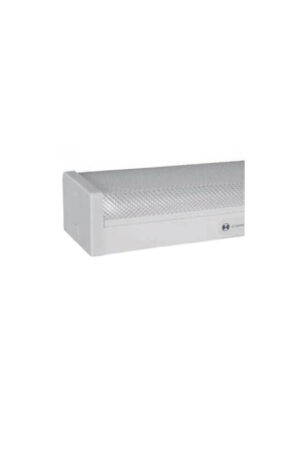
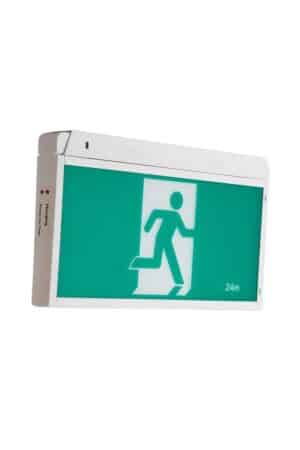
Emergency exit lights are the two-part lighting system required in Australian commercial buildings: emergency lights that illuminate escape routes when power fails, and exit lights that permanently mark the location of emergency exits. Under AS/NZS 2293 and the National Construction Code, both types are mandatory in most commercial, industrial, and multi-residential buildings. All models in our range are AS/NZS 2293 compliant and ready to install.
Shop Emergency Lights → Shop Exit Lights →
Emergency Lights vs Exit Lights — What’s the Difference?
|
Emergency Lights |
Exit Lights |
| Function |
Illuminate escape routes when mains power fails |
Mark the location of emergency exits at all times |
| When they activate |
On power failure only (non-maintained) or always on (maintained) |
Always illuminated (maintained) |
| Where installed |
Corridors, stairwells, open floor areas, car parks |
Above every emergency exit door and along escape routes |
| Battery backup required |
Yes — minimum 90 minutes under AS/NZS 2293 |
Yes — minimum 90 minutes under AS/NZS 2293 |
| Common types |
Batten, twin-spot, oyster, weatherproof |
Blade, recessed, surface mount, bulkhead |
Most buildings need both. Exit lights go above every emergency exit door. Emergency lights go in the corridors, stairwells, and floor areas between exits — providing the illumination needed to actually reach those exits in the dark.
Choosing by Building Type
Office Buildings and Commercial Tenancies
Install exit lights above all fire exit doors (typically stairwell doors and external exits). Add emergency lights in corridors, stairwells, and any area without natural light. Twin-spot emergency lights are the most common choice for office corridors — they cover a wide beam angle and satisfy AS/NZS 2293 lux requirements in most corridor widths.
Browse emergency lights →
Retail and Hospitality
High-traffic areas require maintained exit lights that are always visible to the public. Emergency lighting must cover all points of access to exits including back-of-house corridors. Surface mount and blade exit lights are the most common choice for retail due to their low-profile installation.
Browse exit lights →
Industrial, Warehouse and Car Parks
Larger spaces and higher mounting heights require emergency lights with greater lumen output. Weatherproof models (IP54 or higher) are required in car parks, loading docks, and any outdoor or semi-exposed installation. Check lux levels at floor height — AS/NZS 2293 specifies minimums for escape routes and open areas.
Multi-Residential (Apartments and Hotels)
Common areas — including lobbies, corridors, stairwells, and car parks — must have compliant emergency and exit lighting. Individual dwellings are typically exempt, but common area requirements are enforced by state building authorities. A fire protection technician or building certifier can determine what’s required for your specific building class under the NCC.
Battery Types: NiCad vs LiFePO4
All emergency exit lights include an internal rechargeable battery for backup operation. Two battery types are common:
- NiCad (Nickel Cadmium) — Standard choice. Lower upfront cost, proven reliability, widely available as replacements. Typical lifespan 3–5 years before replacement needed.
- LiFePO4 (Lithium Iron Phosphate) — Premium option. Longer lifespan (8–10 years), lighter weight, holds charge better across temperature extremes. Better for hard-to-access installations where battery replacement is costly.
Both meet AS/NZS 2293 requirements. LiFePO4 is the better long-term investment for large installations where battery replacement labour is a significant cost.
Compliance: AS/NZS 2293 and the NCC
- AS/NZS 2293.1 — Design, installation, and operation of emergency lighting systems. Sets minimum lux levels, battery backup duration (90 minutes minimum), and coverage requirements for escape routes.
- AS/NZS 2293.2 — Inspection and maintenance. Requires regular testing — monthly functional test (2–5 second discharge) and annual full-duration test (90 minutes). Testing must be recorded and retained.
- AS/NZS 2293.3 — Emergency luminaire requirements — product certification standard that all compliant fittings must meet.
- National Construction Code (NCC) — References AS/NZS 2293 and mandates emergency lighting in all Class 2–9 buildings (commercial, industrial, multi-residential). Specific requirements vary by building class and state.
Installation must be carried out by a licensed electrician. Testing and maintenance under AS/NZS 2293.2 can be performed by a licensed electrician or a licensed fire protection technician. A compliant test record must be kept on site.
Frequently Asked Questions
What is an emergency exit light?
An “emergency exit light” refers collectively to both emergency lights (which illuminate escape routes on power failure) and exit lights (which mark the location of emergency exits). In Australia, both types are required under AS/NZS 2293 and the National Construction Code in most commercial and multi-residential buildings.
Do I need both emergency lights and exit lights?
Yes, in most commercial buildings. Exit lights go above every emergency exit door and must be visible from any point along the escape route. Emergency lights provide illumination in corridors, stairwells, and open areas between exits so occupants can safely navigate to those exits when the main lighting fails.
How long must emergency exit lights last on battery?
A minimum of 90 minutes, as required by AS/NZS 2293. This gives occupants and emergency services adequate time to evacuate and for power to be restored. All products in our range meet or exceed this requirement.
How often do emergency exit lights need to be tested?
Under AS/NZS 2293.2: a functional test (2–5 second discharge) monthly, and a full 90-minute duration test annually. All test results must be recorded in a logbook kept on site. Testing can be done by a licensed electrician or a licensed fire protection technician.
Can I install emergency exit lights myself?
No. Installation must be carried out by a licensed electrician. Once installed, routine testing under AS/NZS 2293.2 can be performed by a licensed electrician or fire protection technician. Attempting unlicensed electrical installation in Australia is illegal and voids any compliance certification.